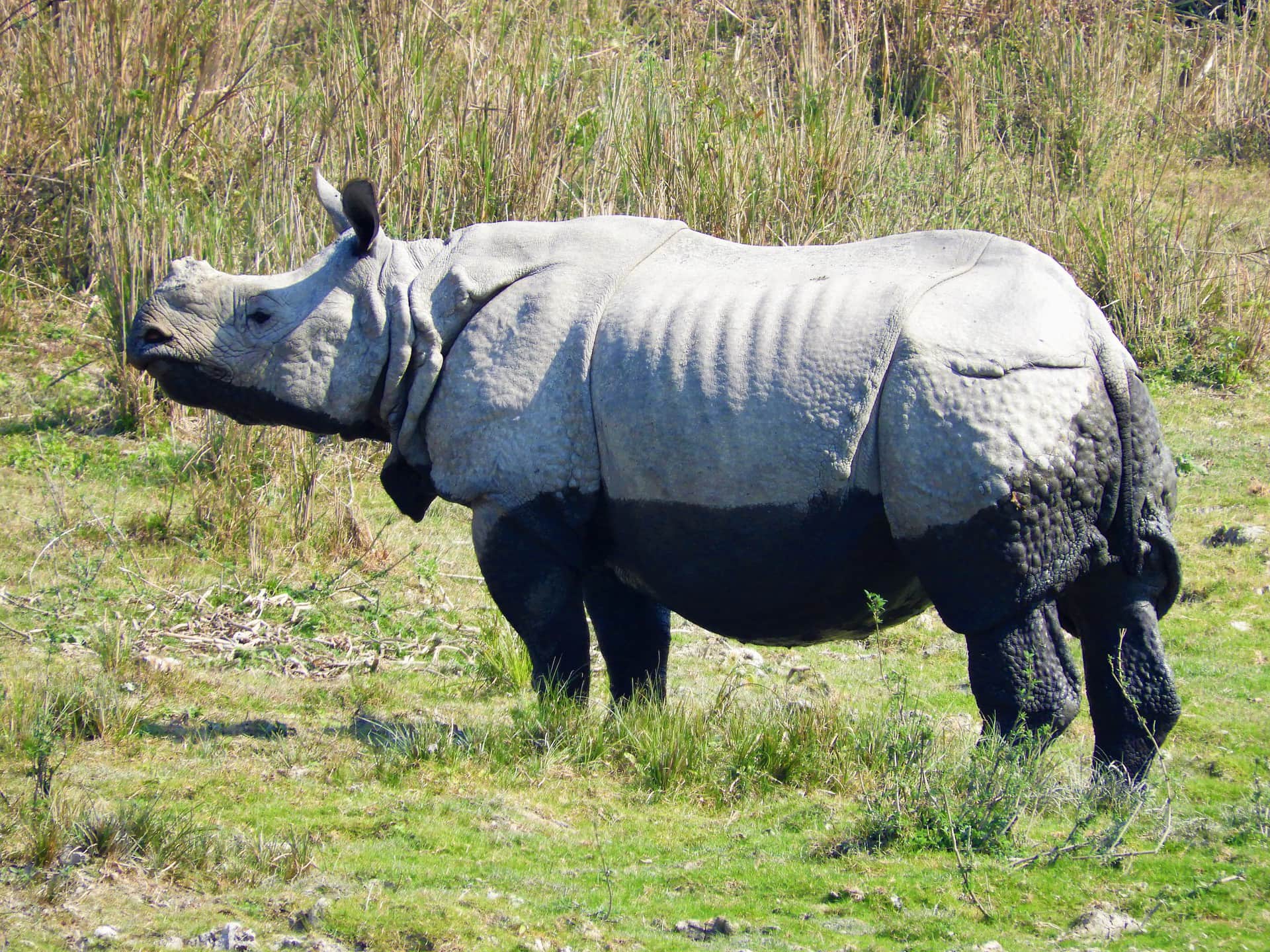
The Indian Rhinoceros is the undisputed icon of Kaziranga National Park and the embodiment of Assam's conservation heritage. Weighing up to 2,500 kg and standing nearly 2 meters at the shoulder, this is a creature of extraordinary presence. Its single horn, composed of compressed keratin rather than bone, can grow to 25 cm and has unfortunately been the primary driver of poaching pressure.
Unlike its African relatives, the Indian Rhino is primarily solitary, occupying well-defined territories in the tall elephant grass and swampy areas that characterize the Brahmaputra floodplain. They are excellent swimmers and can often be observed crossing rivers and wallowing in lakes, behaviors that are essential for thermoregulation and parasite control.