Khasi
The Khasi are one of the few remaining matrilineal societies in the world, a distinction that makes them a subject of enduring anthropological fascination and a living challenge to assumptions about social organization. Numbering approximately 1.5 million, the Khasi inhabit the rain-drenched highlands of eastern Meghalaya, centered around the city of Shillong and extending through the breathtaking limestone landscapes of the East and West Khasi Hills.
In Khasi society, children take their mother’s surname, property is inherited through the female line, and the youngest daughter (ka khadduh) inherits the ancestral home. The maternal uncle (kni) plays a significant role in family governance, creating a nuanced social structure that balances matrilineal descent with male civic authority. This system has persisted for centuries despite colonial and post-colonial pressures, though it is increasingly debated within Khasi society itself.
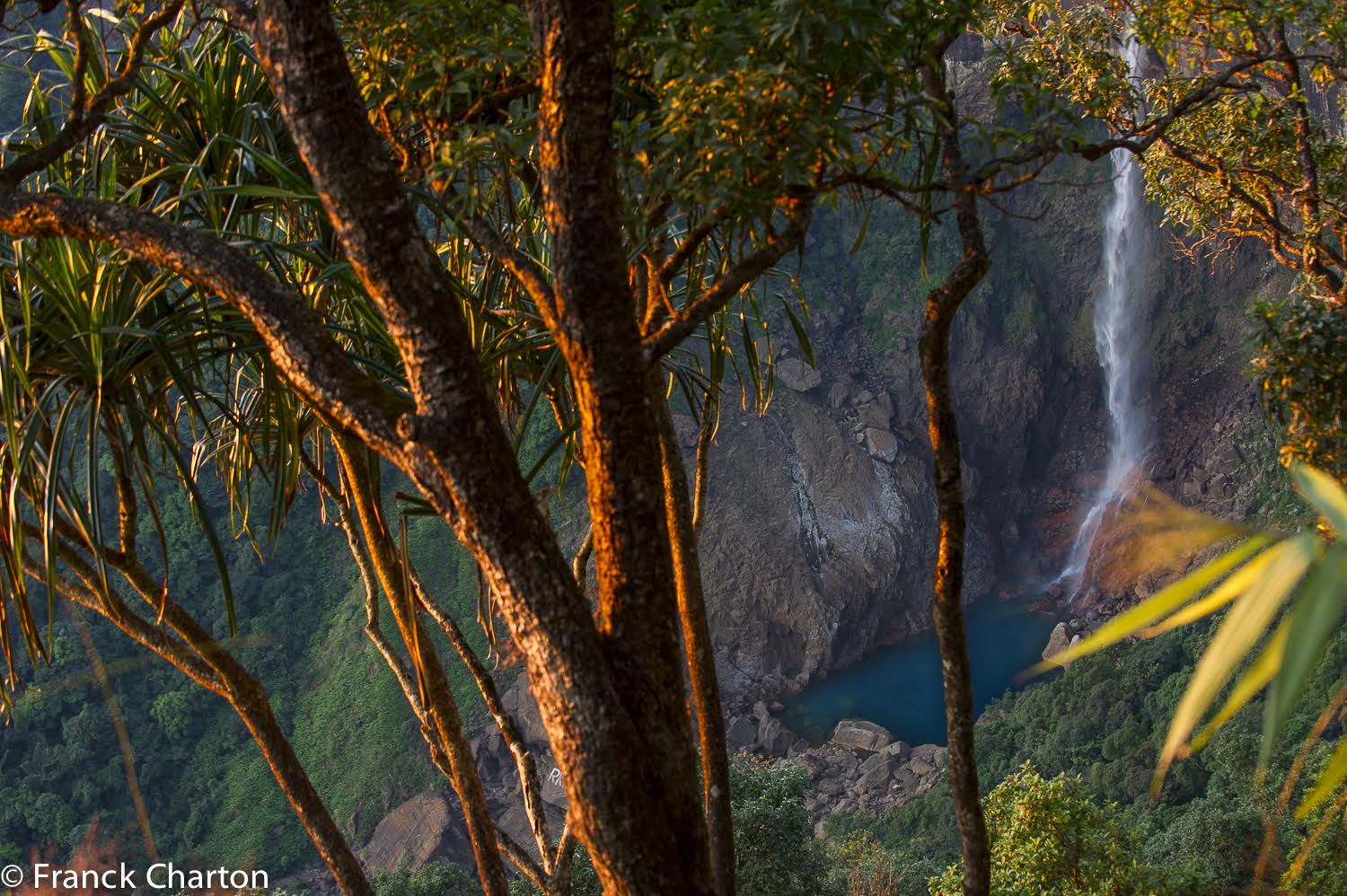
The Khasi relationship with the natural world is expressed through their tradition of sacred groves (law kyntang), patches of ancient forest preserved as abodes of spirits and ancestors. These groves, protected by strict customary taboos against cutting or harvesting, have inadvertently created some of the most pristine old-growth forests in South Asia. In a region that receives some of the highest rainfall on Earth, these sacred landscapes have also given rise to the extraordinary living root bridges, one of the most remarkable examples of bioengineering in the world.
Linguistically, the Khasi stand apart from their Tibeto-Burman neighbors. Their language belongs to the Austroasiatic family, linking them to the Mon-Khmer peoples of Southeast Asia rather than the Tibetan-origin communities that dominate the rest of Northeast India. This linguistic connection suggests an ancient migration from the east, a journey preserved in Khasi oral traditions and the distinctive cultural practices that set them apart from neighboring tribes.
Craft Traditions
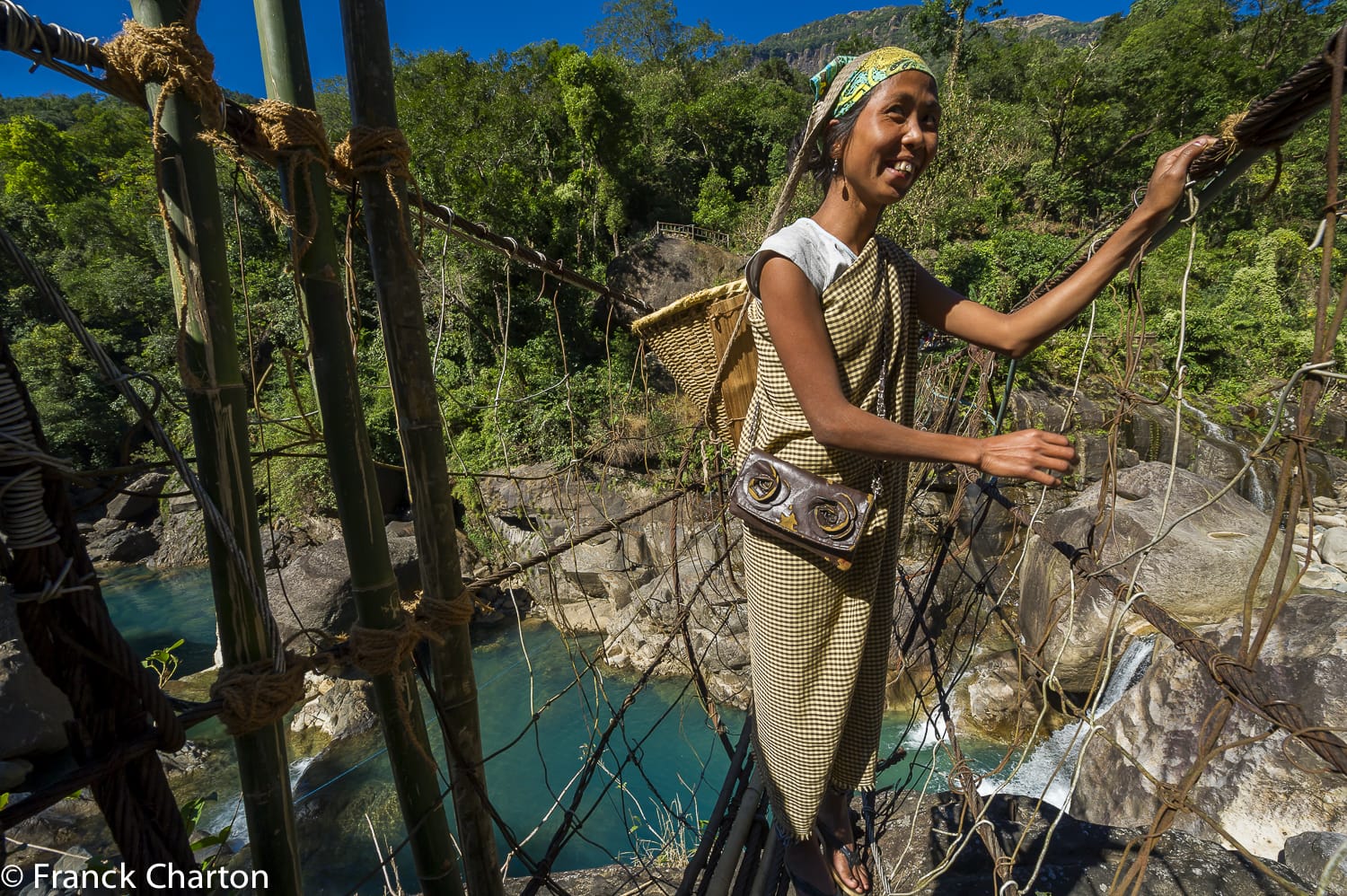
The most celebrated Khasi craft tradition is the creation and maintenance of living root bridges, a form of bioengineering unique to the Khasi Hills. By training the aerial roots of the Indian rubber fig tree (Ficus elastica) across rivers and ravines, Khasi communities have created functional bridges that strengthen over time, some spanning more than 30 meters and bearing the weight of dozens of people simultaneously. The process takes 15-30 years, meaning each bridge represents a multi-generational commitment to community infrastructure.
Cane and bamboo work is the primary artisanal tradition, producing a range of objects from rainproof knup (conical rain shields, an iconic Khasi image) to storage baskets, fish traps, and furniture. Khasi women weave the jainsem, a distinctive two-piece garment worn on ceremonial occasions, using patterns that vary by clan and district.
Archery holds a unique cultural position among the Khasi. Far beyond a sport, it is deeply embedded in Khasi identity, with organized archery competitions (teer) held daily in Shillong and serving as the basis for a regulated lottery system that is unique to Meghalaya.
Visiting Etiquette
Khasi society is generally open and welcoming to visitors. English is widely spoken, particularly in and around Shillong, making communication easier than in many parts of Northeast India. When visiting sacred groves, observe strict silence and do not remove any plant material, stones, or artifacts. The groves are considered the dwelling places of spirits, and violations of their sanctity are taken very seriously by local communities.
At living root bridge sites, particularly in Nongriat and Mawlynnong, respect the infrastructure: do not swing on or damage the living roots. If staying in village homestays, remove shoes before entering homes and accept offers of tea and kwai (betel nut), which is central to Khasi social interaction. During the Nongkrem and Shad Suk Mynsiem dance festivals, photography of the ceremonial proceedings should be done discretely and from designated areas.