Konyak
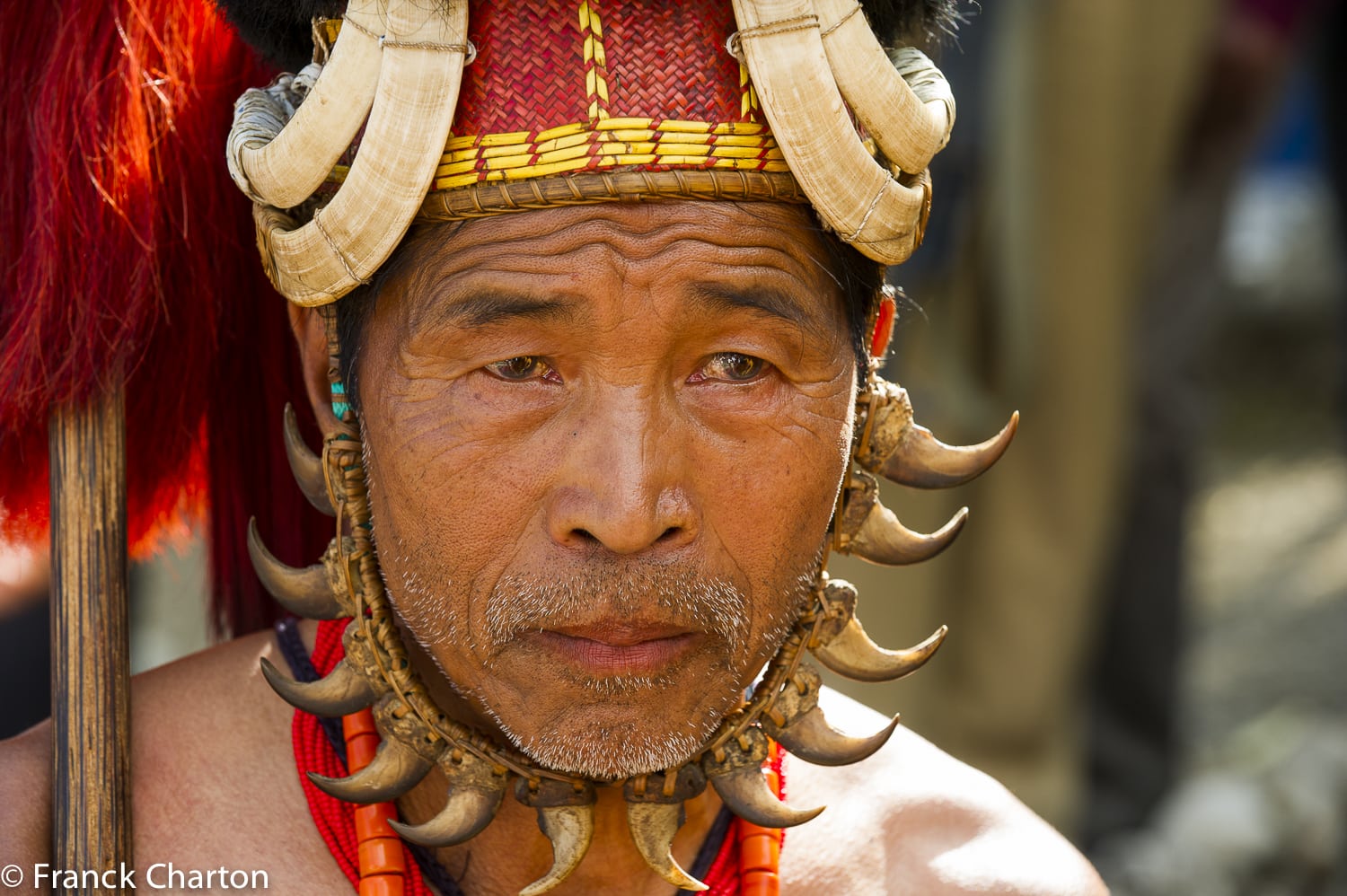
The Konyak are the largest tribe of Nagaland, inhabiting the Mon district in the state’s northeastern corner, along the Myanmar border. Known historically as headhunters, the Konyak maintained one of Southeast Asia’s most formidable warrior traditions until the mid-twentieth century. Today, the last generation of tattooed headhunters, now elderly men with elaborate facial tattoos that record their achievements in battle, represent a living connection to this extraordinary past.
Konyak society is organized around the institution of the Angh (chief), a hereditary leadership system that persists to this day. The Angh’s authority over village affairs, though now largely ceremonial, reflects a hierarchical social structure that distinguishes the Konyak from many other Naga tribes. Villages are centered around the morung, a large communal dormitory where young men were traditionally trained in warfare, craftsmanship, and tribal law.
The village of Longwa, perched on the Indo-Myanmar border, is perhaps the most famous Konyak settlement. The Angh of Longwa’s house literally straddles the international boundary, with the chief presiding over villages in both countries. This cross-border identity reflects the colonial-era drawing of boundaries that divided the Konyak homeland without regard for its cultural geography.
Despite the adoption of Christianity by the majority of the population, traditional practices persist in complex synthesis with modern faith. The skull trees in some villages, once draped with enemy heads, now stand as historical monuments. The annual Aoling festival in April remains the most important Konyak celebration, marking the arrival of spring with six days of feasting, dancing, and the renewal of social bonds.
Craft Traditions
The Konyak are master blacksmiths, a skill directly tied to their warrior heritage. Traditional forges produce dao (machetes), spearheads, and ornamental pieces that continue to be crafted using ancestral techniques. Konyak ironwork is distinguished by its functional elegance, with the dao serving as both tool and cultural symbol.
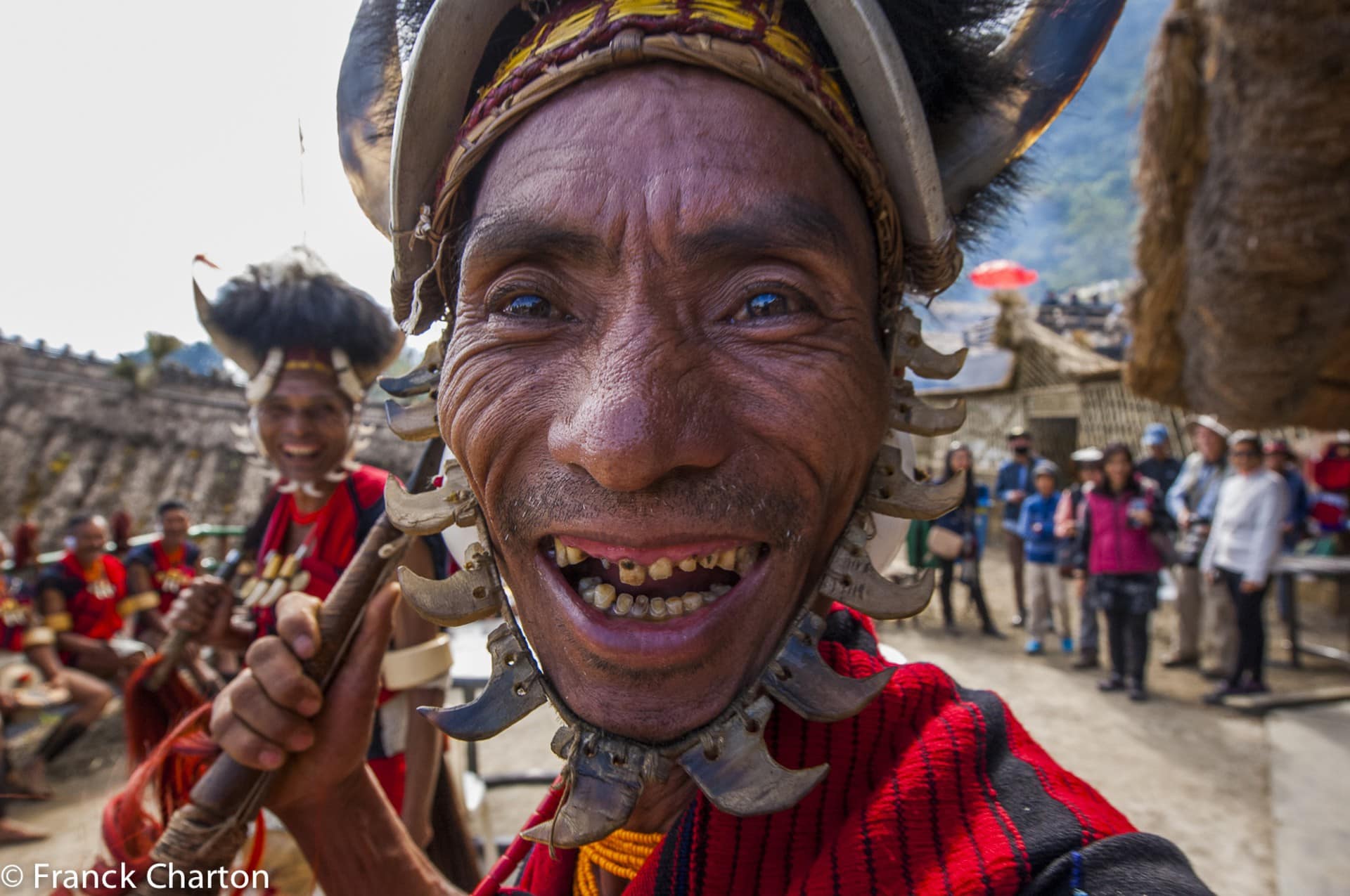
Weaving among the Konyak produces distinctive textiles marked by bold geometric patterns in dark blues, reds, and blacks. The patterns are not merely decorative; specific motifs indicate clan affiliation, social status, and achievements. The dark-hued Konyak shawl, worn with a warrior's headdress of hornbill feathers and wild boar tusks, constitutes one of the most striking ceremonial ensembles in all of tribal Asia.
Wood carving is another significant tradition, with morung posts featuring elaborate carved figures of warriors, hornbills, and mithun (semi-domesticated bison). These carvings serve as visual records of tribal history and are considered among the finest examples of Naga art.
Visiting Etiquette
Visiting Konyak villages requires genuine cultural sensitivity. Always seek the Angh's permission before entering a village, typically arranged through a local guide. When meeting the Angh, a small gift of betel nut or tea is customary. Remove your shoes before entering any traditional structure, particularly the morung and the Angh's house.
The most important etiquette concern relates to the elderly tattooed men. Their facial tattoos are not decorative but represent sacred achievements and clan markings. Always ask permission before photographing them, and understand that some may decline. Never touch their tattoos or headhunting trophies (skull trees and trophy skulls are still present in some villages). If offered rice beer, accept graciously even if you only take a small sip, as refusal can be considered disrespectful.