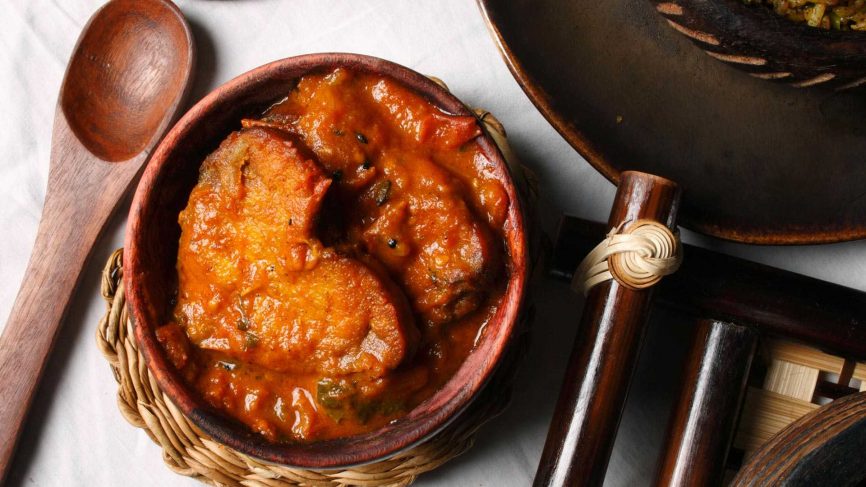
Akhuni
Ancestral fermentation meets bold Naga flavor
Akhuni, or fermented soybean, is the cornerstone ingredient of Naga cuisine and one of the most distinctive flavors in all of Indian gastronomy. Produced by wrapping boiled soybeans in banana leaves and allowing them to ferment for several days near the kitchen fire, akhuni develops an intensely pungent aroma and deep umami flavor that forms the foundation of countless Naga dishes.
The role of akhuni extends far beyond mere seasoning. In a mountainous region where refrigeration was historically unavailable, fermentation was the primary method of food preservation. Akhuni, along with smoked meats and fermented bamboo shoot, represents the ingenuity of Naga food technology. The smoking of pork, in particular, is an art form: cuts of pork are hung above the kitchen hearth for days or weeks, absorbing the fragrant smoke of oak and cherry wood, resulting in a deeply flavored protein source that keeps for months without refrigeration.
Every Naga household maintains its own akhuni supply, and the quality of a family’s fermented soybean is a point of considerable pride. Combined with the legendary Naga King Chili (Bhut Jolokia), one of the world’s hottest peppers, and smoked meats, akhuni creates flavor combinations of extraordinary complexity and intensity that have no parallel elsewhere in Indian cooking.
Historical Context
Fermentation is central to Naga food culture, born from the practical necessity of preserving food in a mountainous region without refrigeration. Akhuni (fermented soybean) and smoked meat techniques represent centuries of accumulated food technology. The smoking of pork over specific wood types, the fermentation of bamboo shoots, and the preparation of various rice beers all reflect a sophisticated understanding of microbiology that predates Western science.
The Hornbill Festival has played an important role in popularizing Naga cuisine beyond the state's borders, with the festival food court serving as a showcase for tribal culinary traditions. This exposure has contributed to a growing appreciation of Naga food as one of India's great culinary traditions, distinct from the better-known cuisines of the subcontinent.