Indian One-Horned Rhinoceros
Rhinoceros unicornis
Overview
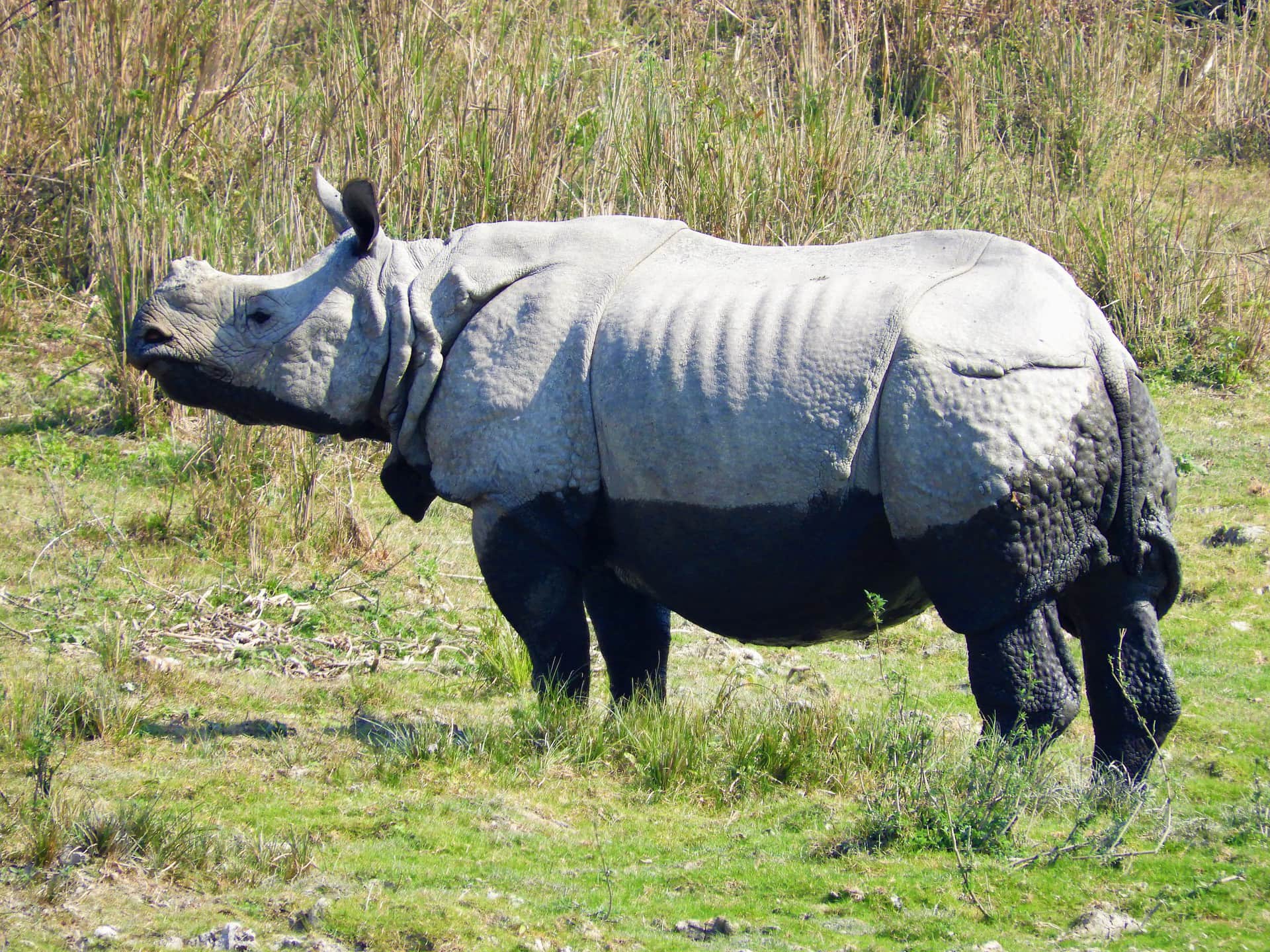
The Indian Rhinoceros is the undisputed icon of Kaziranga National Park and the embodiment of Assam's conservation heritage. Weighing up to 2,500 kg and standing nearly 2 meters at the shoulder, this is a creature of extraordinary presence. Its single horn, composed of compressed keratin rather than bone, can grow to 25 cm and has unfortunately been the primary driver of poaching pressure.
Unlike its African relatives, the Indian Rhino is primarily solitary, occupying well-defined territories in the tall elephant grass and swampy areas that characterize the Brahmaputra floodplain. They are excellent swimmers and can often be observed crossing rivers and wallowing in lakes, behaviors that are essential for thermoregulation and parasite control.
The Indian One-horned Rhinoceros (Rhinoceros unicornis) is the largest of Asia’s rhinoceros species and one of the most iconic animals on the planet. Clad in what appears to be armored plating, with deep folds of skin that give it a prehistoric, almost mechanical appearance, this magnificent creature is inextricably linked to the floodplain grasslands and riverine forests of the Brahmaputra Valley in Assam.
Once ranging across the entire Indo-Gangetic plain from Pakistan to the Myanmar border, the species was reduced to fewer than 200 individuals by the early twentieth century. The remarkable recovery to over 3,700 animals today, primarily concentrated in Kaziranga National Park, represents one of the greatest conservation success stories in wildlife history and a testament to decades of dedicated protection efforts.
Identification Tips
Unmistakable among Indian mammals. The skin hangs in heavy folds at the shoulder, neck, and rump, creating the appearance of armored plates. The skin is studded with raised bumps (tubercles) that reinforce the armored appearance. Color ranges from grey to brown, though individuals are often coated in mud from wallowing. The single horn is present in both sexes but is more prominent in males.
In the field, listen for loud vocalizations: snorting when alarmed, a honking contact call, and a high-pitched shriek during aggressive encounters. Dung middens (communal defecation sites) and muddy wallow marks on trees are reliable signs of rhino presence.
Where to Find
Kaziranga National Park (Assam): The premier location, with the highest concentration globally. The Central Range (Kohora) and Western Range (Bagori) offer the most reliable sightings. Pobitora Wildlife Sanctuary (Assam): Just 50 km from Guwahati, this small reserve has the world's highest rhino density. Orang National Park (Assam): A smaller, quieter alternative to Kaziranga. Manas National Park (Assam): Rhinos translocated from Kaziranga as part of the Indian Rhino Vision 2020 program.
Ethical Guidelines
Always remain on designated trails and in your vehicle during jeep safaris. Do not approach on foot. Maintain a minimum distance of 20 meters, though most sightings in Kaziranga are at much closer range from elephant-back or vehicle. Never use flash photography. Keep voices low. If a rhino raises its head and points its ears toward you, the vehicle should back away slowly as this indicates alert behavior that may precede a charge.